Notes for the journey
Best time to visit Uyuni: mirror or dry salt?
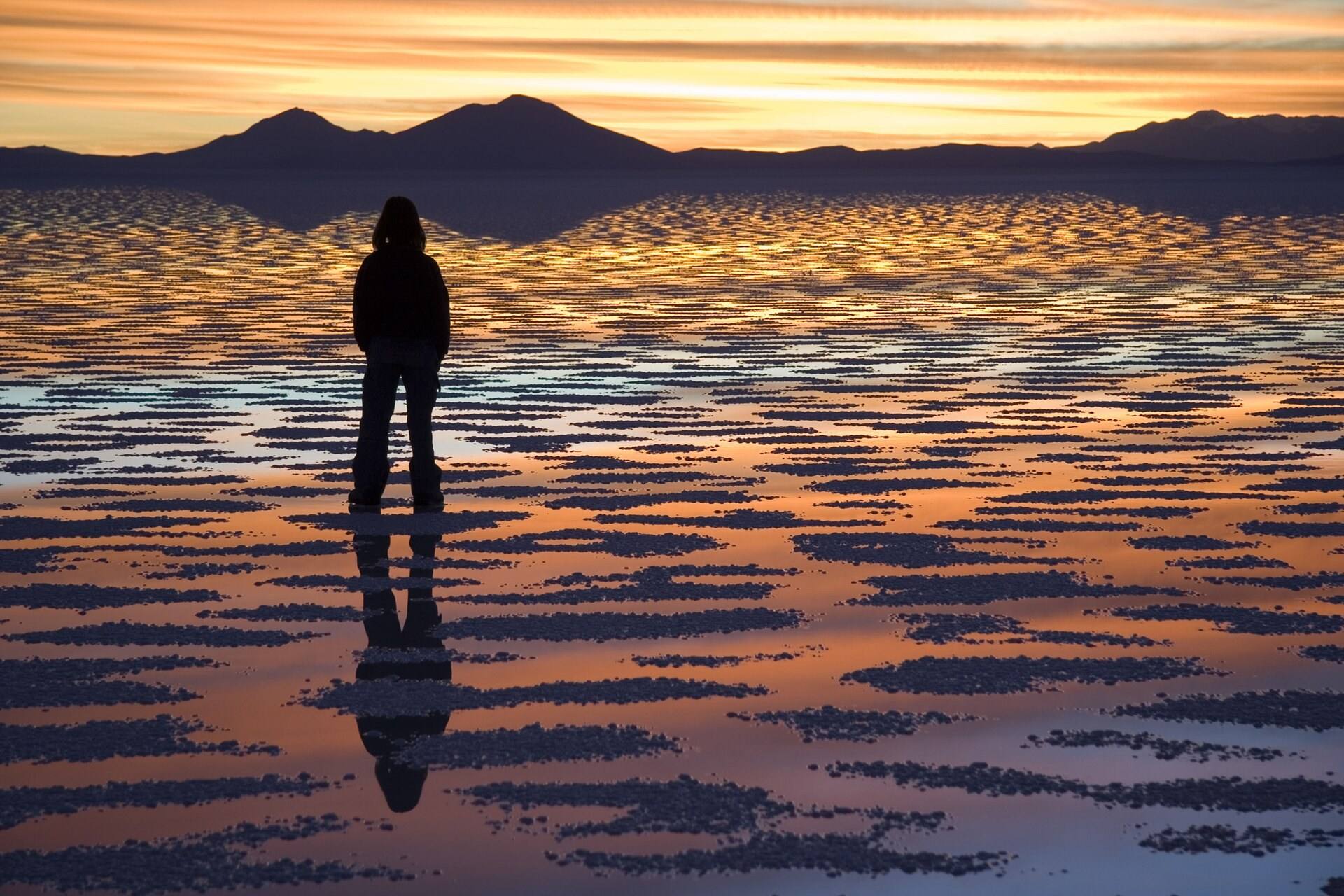
The best time to visit Bolivia depends on your destination. At Uyuni, choose between seeking wet-season reflections and expecting a generally drier salt surface. A single “best month” cannot guarantee both the mirror and every stop on a dry-season itinerary.
Compare tours: Salar de Uyuni tours: prices & routes [2026] →
Updated
The short answer
The official mirror-season window is broadly December–April. It describes a season, not the probability of a reflection on your date.
What the official window actually means
Bolivia’s destination brochure associates December–April rainfall with the shallow water layer that can reflect the sky. Depth, wind and cloud still determine the result, and the accessible part of the salar can change. Some operators advertise wider windows: Nomadex t684882 describes January–June and explicitly warns that a mirror is not guaranteed. That is a seller’s operational description, not evidence that the national seasonal guidance is wrong.
Why there is no mirror percentage here
SENAMHI publishes measured precipitation summaries, including Uyuni airport observations, but a rainfall total is not a probability of usable standing water at your photography stop. We did not locate a consistent, well-defined monthly mirror dataset. Converting monthly millimetres into a percentage would invent precision. Use the qualitative calendar to set expectations and ask your operator about current conditions near departure.
Tradeoffs of the wetter itinerary
Water can create reflections while preventing the usual crossing to Incahuasi. Ask which routes remain accessible, what replaces an unavailable island stop and how cancellation or replanning works. A product showing island cacti and a perfect mirror does not guarantee both on the same day. If one feature is essential, explain your priority before booking rather than negotiating after the group has left.
Dry conditions and photography timing
A generally drier visit emphasizes exposed salt and perspective photography. Nights and early starts still need warm clothing. Sunset, stars and sunrise are separate objectives: moonlight and cloud affect a night session, and returning after dark does not establish that stargazing is included. Check the booked duration, time actually stopped and available photography assistance.
Choose a trip you can adjust
Keep some time between arrival, the excursion and onward transport. Road and fuel conditions can alter travel independently of the salar weather. For a multi-day circuit, check overnight elevations and equipment rather than using the city forecast as a description of every stop. Reconfirm footwear for wet salt and protect electronics; a flexible plan is more useful than an unsupported forecast months in advance.
Choose the trade-off before choosing the month
If reflection photographs are the priority, ask about recent surface conditions, rain, wind and the alternative if the water is absent or unsuitable. If the island walk and a wider dry-land route matter more, ask whether access is expected to operate on your date. These are separate questions: the same water that produces a reflection can change the journey.
For a trip that combines stars and the mirror, consider cloud and moonlight as well as water. A seasonal label cannot supply those conditions together. Keep travel and onward connections flexible enough to accept the operator’s safe alternative instead of building every later booking around one advertised photograph.
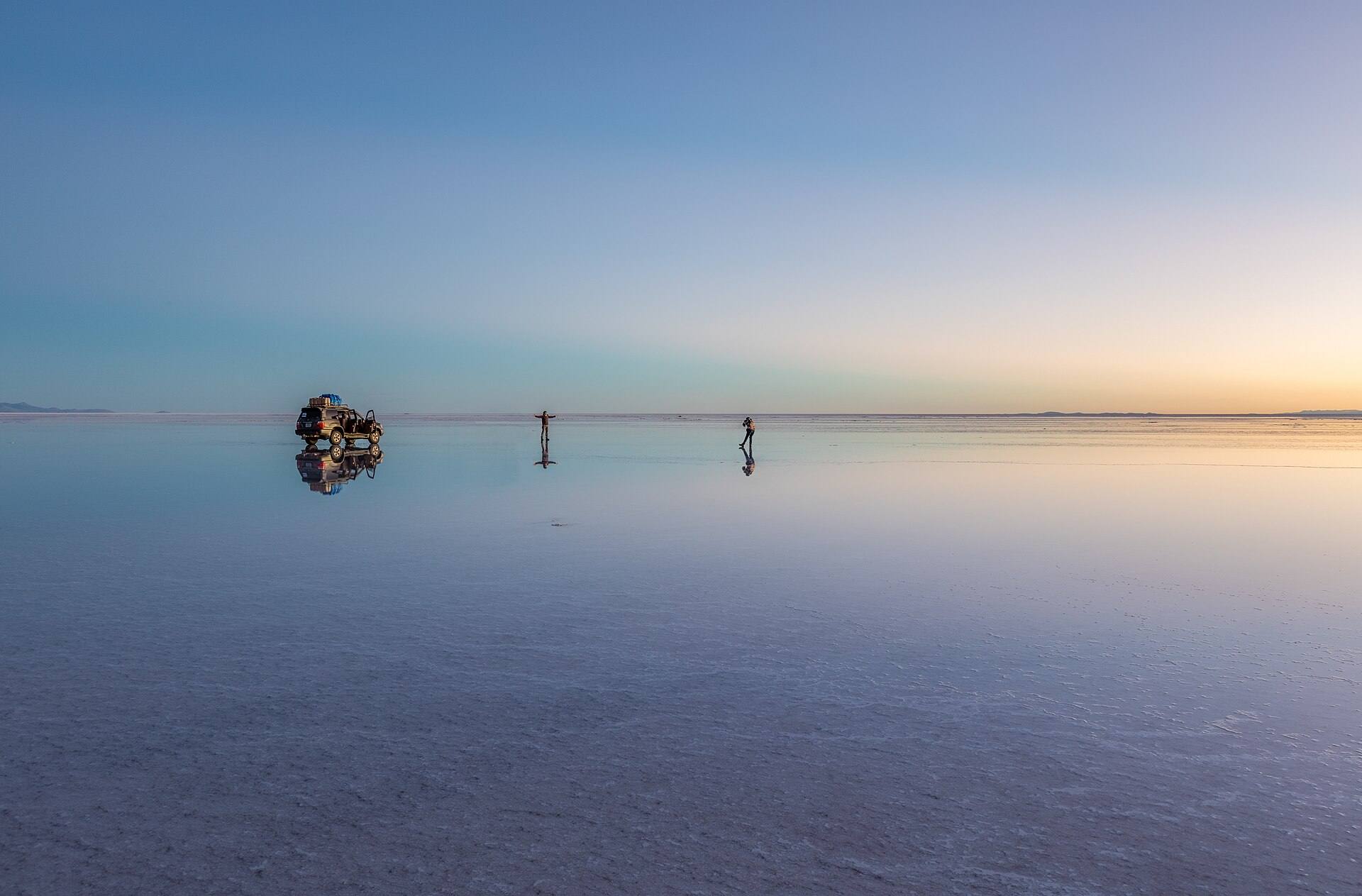
Travellers and a vehicle reflected at sunrise on the Salar de Uyuni.
Sources & last checked
Checked 20 October 2026. Prices, access and transport can change; confirm with the linked official source before travelling.
Plan your trip
Compare tours
Check current dates, inclusions and availability on GetYourGuide.
We may earn a commission on bookings through these links. How this works.