Wait for the light to change
Uyuni at night: sunset, stargazing and mirror tours
Sunset and stargazing are different bookings unless a product explicitly combines them. A reflected night sky adds another condition: the right shallow water surface. Choose the session around what you most want to experience.
Updated
The short answer
Book a dedicated night session for stars. Check moonlight, weather alternatives and photography support; neither a clear sky nor a reflection is guaranteed.
Choose the session, not just the photograph
A sunset tour follows the changing horizon colors. A stargazing session needs an appropriate period of darkness, while a sunrise trip works through the opposite transition. Some products combine these, but their timing and priorities differ.
Read the departure, actual time on the salar and expected return. Returning to town after dark does not itself mean a tour includes a substantial night-sky stop or instruction in long-exposure photography.
What the mirror needs
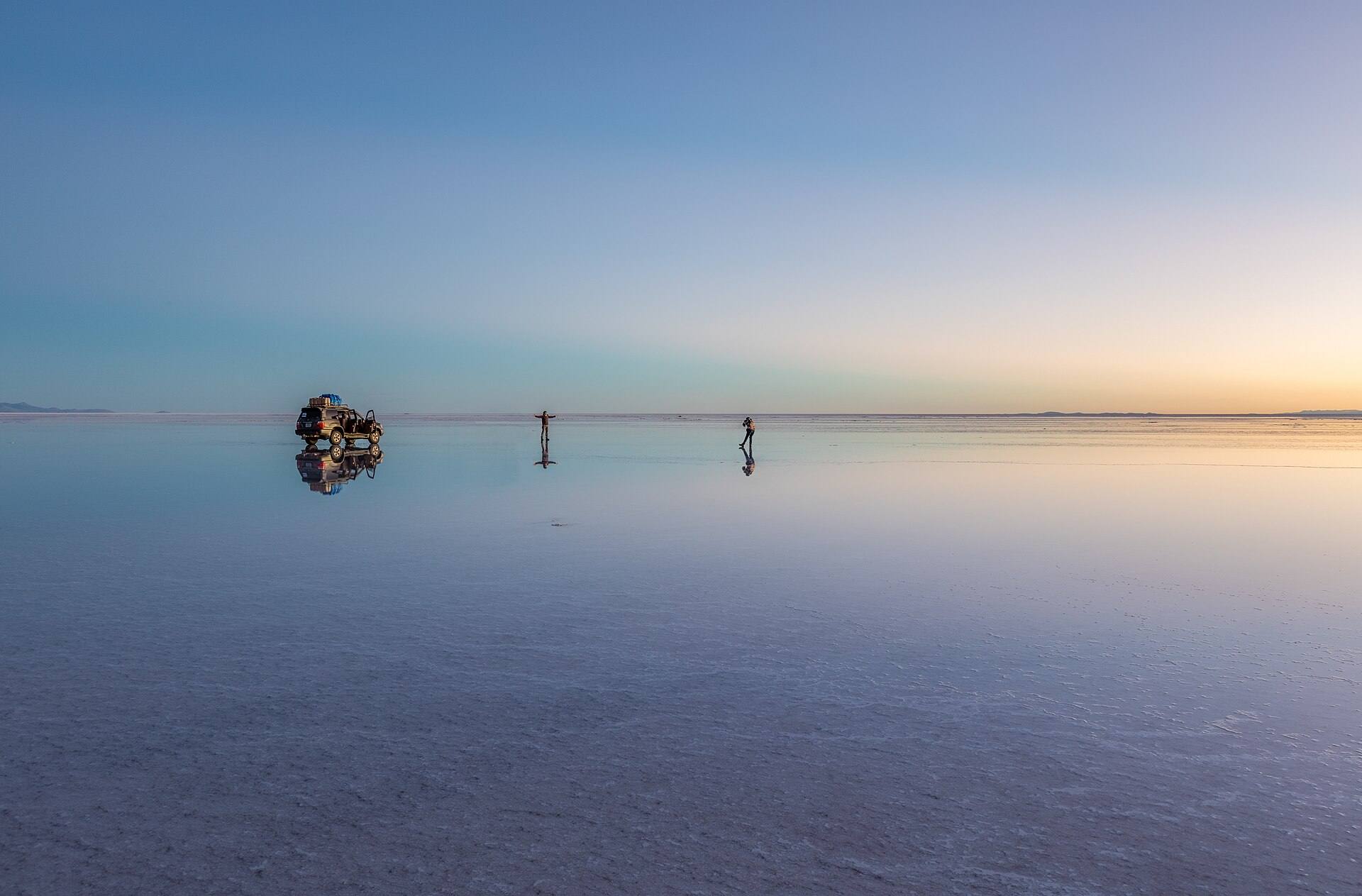
The official rainy-season window is broadly December–April. Standing water can create reflections, but wind and depth affect whether that surface is usable and where a guide can take you. Clouds can enhance sunset colors while obscuring the stars later.
Moon phase and session timing matter too. A moonlit landscape can be beautiful without matching a photograph of a dark Milky Way sky. Explain your photographic goal and ask which conditions the operator expects for your particular date.
Photography assistance versus sightseeing
Decide whether you want to watch the sky, receive photographs made by a guide or learn to use your own equipment. A product described as photographic does not automatically include a tripod or technical help.
- Confirm group size and the time available for each traveller.
- Check pickup and return for Uyuni town or your particular Colchani hotel.
- Ask about waterproof boots, sizes, tripods and other equipment.
- Check whether camera or phone instruction is provided.
- Read the weather-change policy and what happens if the desired conditions do not occur.
Prepare for standing still in the cold
Night photography involves waiting rather than keeping warm through steady walking. Bring suitable layers and protection for your hands and head. Follow the operator’s advice on footwear and keep electronics away from salt water.
Ask about warming breaks and drinks rather than assuming they are included. Carry personal essentials, protect spare batteries and stay with the guide’s route. This is still a high-altitude outing, even if the session lasts only a few hours.
Make the timing work
If you already have a daytime tour, compare a confirmed extension with a separate night departure. Allow time for dinner, rest and the meeting point. A late return followed by an early flight can undermine the whole plan.
Arrive with time to adjust to altitude and leave a buffer before onward transport. Reconfirm pickup and weather close to departure, keeping the distinction between a cancelled service and an operating tour without the hoped-for visual conditions.
Sources & last checked
Checked 20 October 2026. Prices, access and transport can change; confirm with the linked official source before travelling.
Plan your trip
Compare tours
Check current dates, inclusions and availability on GetYourGuide.
We earn a commission on bookings through these links. How this works.